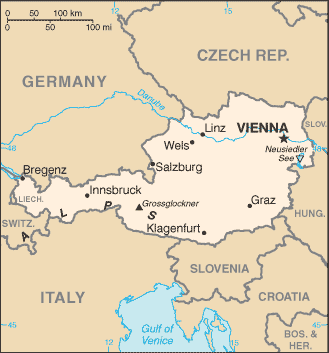
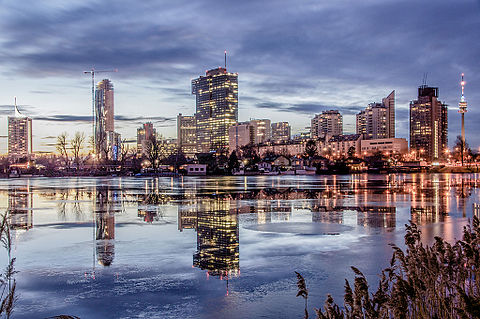
It is a federation of nine states. Austria emerged from the remnants of the Eastern and Hungarian March at the end of the first millennium. Originally a margraviate of Bavaria, it later developed into a duchy of the Holy Roman Empire, in 1156, and then an archduchy, in 1453. In the 16th century, Vienna began serving as the administrative imperial capital, and Austria thus became the heartland of the House of Habsburg. After the Empire's dissolution in 1806, Austria established its own empire
Economy: It's a developed social market economy. Until the 1980s, many of Austria's largest industry firms were nationalised. In recent years, privatisation has reduced state holdings to a level comparable to other European economies. Labour movements are particularly strong in Austria, and they have a large influence on labour politics. Next to a highly developed industry, international tourism is the most important part of the national economy. Germany has historically been the main trading partner


 austria